

Money-Saving Grocery Hacks for Large Families
Feeding a large family can feel like a full-time job all by itself.
There are breakfasts to make, lunches to pack, dinners to prepare, snacks to keep stocked, and hungry children who somehow need another meal just minutes after the kitchen has been cleaned. With grocery prices through the roof right now, even a carefully planned shopping trip can leave you wondering how several bags of food managed to cost so much.
My money-saving tips here do not include clipping every coupon, visiting five different stores, or cooking every single ingredient from scratch. We’re all busy moms here, so I’m simply sharing what we do as a busy family of 8, with 6 kids at home all day while we homeschool. So these are all realistic, and most importantly, applicable to any family situation.
The goal is not to create the cheapest possible grocery list. The goal is to make a practical plan, purchase food your family will actually eat, and use what you bring home before it goes to waste.
Here are several realistic ways large families can lower grocery expenses without making meal planning more complicated.
1. Start With a Realistic Grocery Budget
I know no one likes to hear the “B” word, but sticking to a budget makes or breaks this whole plan. My family and I spend an average of $300/week on groceries, and that includes paper towels, toilet paper, toiletry items, and cleaning supplies. Before you plan meals or make a grocery list, decide how much your family can reasonably spend.
If you are not sure where to begin, review your grocery spending from the past few weeks. Look at what you have actually been spending rather than choosing an ideal number that may not fit your family’s current needs.
Large families often need flexibility because grocery expenses can change depending on children’s ages, school schedules, activities, holidays, and how many meals are eaten at home. When our youngest was still eating baby food, we made a few adjustments to our budget elsewhere to allow for a little extra buffer for that. (Yes, I’m aware I could have made my own, which would have saved me even more, but that didn’t realistically fit into our life’s routine this time around, although I have done it in other seasons of life for some of the older children.)
Once you have a general budget, divide it into smaller amounts. You can choose a weekly grocery limit or keep one monthly number and track it as you shop. I track ours weekly, but I understand everyone will be different, depending on when paychecks come in.
Be sure to account for more than dinner ingredients. Your grocery budget may also need to cover:
Breakfasts
Lunches
Snacks
Drinks
Baking supplies
Cleaning products
Paper products
Toiletries
Separating food expenses from household products can also help you see where your money is actually going. A grocery receipt may look unusually high, but part of that total may have been laundry detergent, toilet paper, shampoo, or cleaning supplies.
Knowing your number before you shop gives you a boundary. It helps you make decisions before you are standing in the store with a full cart.
2. Shop Your Pantry Before You Plan
The least expensive groceries are usually the ones you already own.
Before planning the week’s meals, take a few minutes to look through your pantry, refrigerator, and freezer. You may already have more meal ingredients than you realize.
Check for:
Meat that needs to be used
Produce that is close to spoiling
Open packages of pasta, rice, or beans
Frozen vegetables
Bread or tortillas
Canned goods
Cheese and dairy products
Leftovers that can become lunches
Ingredients purchased for a recipe you never made
Build the first few meals of the week around those items.
For example, if you already have chicken in the freezer, rice in the pantry, and frozen vegetables, you may only need a few additional ingredients to create a full meal. That is much less expensive than choosing an entirely new recipe and purchasing every ingredient from scratch. Pinterest can be so tempting, believe me I know! And while it can be helpful when we’re drawing a blank on what to cook, it can be just as tempting to build elaborate meal plans using ingredients we don’t have, therefore spending a lot more!
A simple freezer inventory can be especially helpful for large families. Keep a list on the freezer door or in your phone and update it whenever you add or remove something. This does not need to be complicated. Even a basic list of meat, frozen meals, bread, vegetables, and leftovers can prevent food from disappearing into the back of the freezer until it is no longer recognizable.
3. Build a Simple Weekly Meal Plan
Meal planning is one of the most effective ways to reduce grocery spending because it gives every purchase a purpose.
Without a plan, it is easy to buy ingredients that sound useful but never come together into an actual meal. A meal plan helps you purchase what your family needs instead of filling the cart with unrelated groceries.
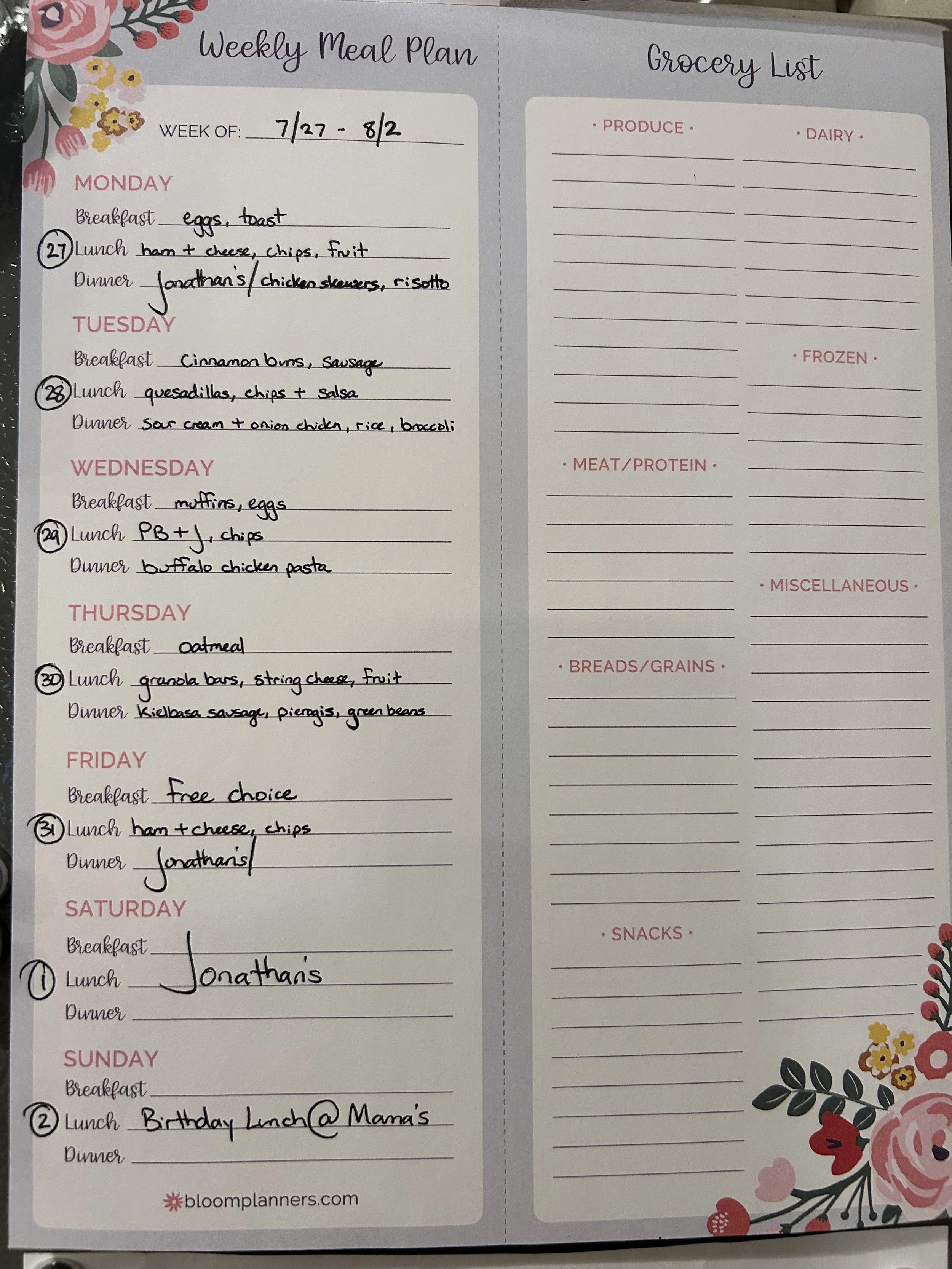
Begin by looking at your family calendar.
Which nights are busy? Which evenings allow more time for cooking? Will anyone be away during dinner? Are there appointments, practices, church activities, or homeschool events that will affect meals?
In our home, our older children go to their father’s house to visit on certain days, so I use those nights to make something for my husband and I that the kids don’t particularly care for.
Plan easier dinners for your busiest nights and save more involved meals for days when you have additional time.
Your meal plan does not need to include seven elaborate dinners. Large families often benefit from simple, familiar meals that can be made in larger portions.
You can find this simple meal planner like mine HERE.
A helpful tip I have used over the years is having a weekly dinner rhythm such as:
Monday: Slow cooker meal
Tuesday: Tacos or Mexican-inspired meal
Wednesday: Pasta
Thursday: Leftovers
Friday: Homemade pizza (or budget for take-out)
Saturday: Soup, sandwiches, or breakfast for dinner
Sunday: Family meal or make-ahead dinner
Something like this reduces decision fatigue and overwhelm because you aren’t starting with a blank page every week. You are simply choosing a meal that fits each category.
Repeating favorite meals is also perfectly acceptable. Your family does not need a completely new menu every week. Familiar meals are often easier to budget, easier to prepare, and more likely to be eaten. We have several family favorites that we repeat each month, and it’s super helpful to incorporate into weekly meal planning.
4. Plan Breakfasts, Lunches, and Snacks
Many families plan dinner carefully but forget about everything else.
Breakfasts, lunches, and snacks can quietly consume a large portion of the grocery budget, especially when most people are home each day for homeschooling, or you are packing lunches for your spouse’s work or kids’ school. While it can again be tempting to plan something different everyday, keeping things simple keeps your grocery trip within budget.
We generally choose two or three healthy choices for the week, to give our kids a good start to the day.
For example:
Oatmeal
Eggs and toast
Yogurt and fruit
Muffins with sausage or bacon
Cereal
Breakfast sandwiches
Lunches can also follow a simple rotation:
Leftovers
Sandwiches and fruit
Quesadillas
Soup
Kids’ version Charcuterie tray (my kids’ favorite!)
Baked potatoes
Snacks are a paradox in our house, because my kids treat it as a 4th meal of the day! LOL To keep things simple and cut down on endless and mindless eating, I offer 3 healthier choices, and rotate them out each month to keep things interesting for them.
Snacks that are sold in individual packages can be convenient, but really add up on the grocery bill. Large containers are often more practical for large families, especially when you portion them yourself. I grab Goldfish and pretzels in larger quantities, then portion them out in Ziploc bags or snack containers for easy, on-the-go snacks for the toddlers in church, park days, field trips, etc.
Some simple snacks we keep in rotation:
Popcorn
Fruit (preferably whatever is in season)
Cheese cubes or String cheese
Pretzels
Boiled eggs
Homemade muffins
Planning snacks ahead of time does not mean children cannot choose; it simply means you decide which options are available before grocery shopping. This helps prevent your cart from filling up with several expensive snack foods that disappear within 2 days.
While we’re on the subject, I wanted to offer a PSA: Kids don’t need milk and juice with every meal. Not only will it lower your grocery bills by cutting these out of mealtimes, it also helps their dental health and keeps them better hydrated by drinking water!
5. Make a Grocery List With a Purpose
As I plan out my meals, I check the pantry, refrigerator, and freezer before adding ingredients to the grocery list. Writing down the ingredients needed for each meal as I plan helps me to not lose focus or forget anything. Generally speaking, the only items added to my grocery list each week are things our family specifically needs for the upcoming week or two, with the exception of staple pantry items if I notice they’re getting low.
If an item on your list does not have a clear purpose, reconsider whether it belongs in the cart.
Organizing your list by store section can also make shopping faster:
Produce
Meat
Dairy
Pantry
Frozen foods
Bread
Household supplies
A well-organized list keeps you moving through the store and reduces the temptation to wander through every aisle.
It can also help to separate necessities from optional items. If you reach the end of your budget, you can remove the optional items first without disrupting the meal plan.
6. Keep a Reliable Supply of Staple Foods
Staple foods make it easier to prepare inexpensive meals without returning to the store multiple times throughout the week.
Every family’s staple list will look different, but it should include foods you regularly use and know your family will eat.
Common staples may include:
Rice
Pasta
Potatoes
Oats
Flour
Sugar
Bread
Tortillas
Canned tomatoes
Beans
Broth
Peanut butter
Frozen vegetables
Eggs
Cheese
Ground beef or sausage
Chicken
Basic seasonings
Staple foods give you flexibility. When the week becomes busier than expected, you can make pasta, soup, tacos, baked potatoes, breakfast for dinner, or a simple casserole without ordering takeout. The key is to choose staples based on your family’s actual habits. Stocking foods no one eats will not save money, even if those foods are inexpensive.
7. Buy in Bulk, but Buy Wisely
Buying in bulk can be helpful for large families because so many foods are used quickly. However, a larger package is not automatically a better purchase, so pay attention to prices!
Bulk buying only saves money when:
The cost per unit, lb, oz, etc is lower
Your family regularly uses the item
You have room to store it
The food can be used before it spoils
The purchase does not consume too much of the weekly budget
Large packages of rice, oats, flour, pasta, meat, cheese, frozen vegetables, and frequently used pantry items may be practical for a large household.
Bulk meat purchases can be a great way to save money. We simply divide the large quantities from Sam’s Club into meal-sized portions in Ziploc freezer bags, label each package with the type of meat and the date, and pop in the freezer. You can also prepare some items before freezing them. For example, ground beef can be cooked and divided into portions for tacos, pasta sauce, casseroles, or soup.
Be cautious about buying unfamiliar foods in bulk. A giant package is not a bargain if half of it is thrown away because your family did not like it. Bulk shopping works best when you already know how quickly your household uses an item.
We use Sam’s Club for the majority of our bulk purchases, but there are also places like Costco and some regions that have BJ’s Wholesale and USFoods Store, which are similar and can offer some great prices!
8. Stretch Expensive Ingredients
Meat, dairy products, and convenience foods are often some of the most expensive items in the grocery cart. Instead of making meat the largest portion of every meal, use it as one part of a filling dish.
You can make your meat go farther by combining it with:
Rice
Pasta
Potatoes
Beans
Vegetables
Eggs
Bread
Tortillas
Broth
Meals such as soups, casseroles, tacos, chili, pasta dishes, fried rice, and shepherd’s pie can feed more people with less meat.
Preparing heartier side dishes also helps. Serving bread or rolls, rice, potatoes, vegetables, fruit, or a simple salad can round out a meal without needing extra meat to fill everyone’s bellies. Now, this does not mean meals need to feel small or unsatisfying, but we try to teach our kids that our meals should be balanced(otherwise they’ll choose to survive solely on candy, bread and mashed potatoes ;) )
The goal is to use our more expensive ingredients thoughtfully while allowing the more affordable ingredients to add volume and balance out your meals.
9. Cook Once, Use Ingredients More Than Once
One of the easiest ways to save both time and money is to prepare ingredients that can be used in several meals.
For example, a large batch of chicken could be used for:
Chicken and rice
Tacos
Soup
Sandwiches
Pasta
Casseroles
Ground beef could become:
Spaghetti sauce
Tacos
Chili
Sloppy joes
Shepherd’s pie
A pot of rice could be served as a side dish one night and turned into fried rice later in the week. You can also double recipes and freeze half for later. Soups, casseroles, sauces, muffins, pancakes, and cooked meat often freeze well.
A freezer meal does not need to be part of an elaborate meal-prep day. Sometimes it is simply one extra pan of the dinner you were already making. This approach doesn’t mean eating the exact same meal several days in a row; it simply allows one cooking session to supply several meals. You’re already cooking it, so why not cook double (or triple) and store the extra for later uses?
10. Make Leftovers Part of the Plan
I know some people are a little “ick” about leftovers, but this can be a tremendous money AND time saver by working these into your weekly meal plan. Leftovers are only helpful if they are actually eaten. Instead of placing everything in the refrigerator and hoping someone remembers it, decide how leftovers will be used.
You might:
Schedule one leftover night each week
Pack leftovers for lunch immediately
Freeze individual portions
Turn leftovers into a different meal
Keep an “eat first” section in the refrigerator
For example:
Leftover roasted chicken can become soup or sandwiches.
Leftover taco meat can become nachos or quesadillas.
Leftover veggies can be added to eggs, soup, or pasta.
Leftover rice can become fried rice.
Leftover bread can become French toast, croutons, or breadcrumbs.
Serving smaller portions can also reduce waste. Family members can always return for seconds, but food left untouched on a plate usually gets thrown away or fed to the animals. Like we tell our kids, “You can always get more if you’re still hungry!”
11. Reduce Food Waste
Throwing away food is one of the fastest ways to lose money from the grocery budget. Food waste often happens because families buy too much, forget what they have, prepare portions that are too large, or fail to use ingredients before they spoil.
Here are a few simple habits that we use in our home:
Place older food toward the front of the refrigerator.
Freeze bread before it becomes stale.
Freeze fruit for smoothies or baking.
Label leftovers with the date.
Plan meals that use perishable foods earlier in the week.
Check the refrigerator before making a snack or lunch.
Avoid opening a new package before finishing the old one.
You may also notice that certain foods are repeatedly wasted. If your family rarely finishes a particular product, buy a smaller amount or stop purchasing it for a while. Your grocery list should reflect what your family truly eats, not what you wish everyone would eat.
12. Pay for Convenience on Purpose
Convenience foods are not always a poor use of money. Sometimes spending a little more on a convenient option prevents a much more expensive takeout order.
A frozen pizza, bagged salad, rotisserie chicken, jarred pasta sauce, or package of pre-cut vegetables may be worthwhile during an especially busy week. The key is to choose convenience intentionally.
Ask yourself:
Will this help me serve a meal on a busy night?
Is this less expensive than ordering food?
Will my family actually eat it?
Does this save enough time to justify the higher cost?
You do not need to make everything from scratch to manage groceries wisely. A sustainable plan should match the reality of your family’s schedule.
13. Keep Emergency Meals on Hand
Every family has evenings when the original plan falls apart. An appointment runs late. A child becomes sick. The day becomes unexpectedly exhausting. The meat is still frozen at dinnertime.
Without a backup plan, those nights often end with an expensive drive-through order. Keep two or three emergency meals available that can be prepared quickly. This is where those staple grocery items come in handy.
Examples include:
Pasta and sauce
Grilled cheese and soup
Eggs and toast
Quesadillas
Frozen pizza
Baked potatoes
Sandwiches
Pancakes
Rice and beans
Chicken nuggets and frozen vegetables
Emergency meals do not need to be impressive. They simply need to be faster and less expensive than takeout.
14. Review What Worked
While you’re learning how to navigate this whole meal planning idea, take a few minutes at the end of the week to look back at the meal plan.
Before planning the next week, ask yourself:
Which meals did everyone enjoy? These could be ones you add to a rotating meal plan for simplicity.
Which foods were left over? These may be ones you make less of if they weren’t as popular.
What spoiled before we used it?
Did I buy too much of anything?
Did we run out of a staple? Keeping inventory sheets help in these areas.
Which meals were easiest on busy days?
What should I repeat next week?
Keep a list of reliable family meals that are affordable, filling, and simple to prepare. Over time, this list becomes your personal meal-planning library. You can simply choose from meals that already work instead of searching for new ideas every week.
Keep the System Simple
Saving money on groceries is not about creating a perfect meal plan or never purchasing an unnecessary item. It is about developing a repeatable system.
Start by checking what you have. Plan meals your family will eat. Keep reliable staples on hand. Buy frequently used foods in larger quantities when it makes sense. Use leftovers intentionally. Prepare for busy nights before they happen.
Small habits may not seem dramatic, but repeated over weeks and months, they can make a meaningful difference.
The best grocery-saving plan doesn’t have to be complicated. It is the one that helps you feed your family well, stay within your budget, and spend less time wondering what you are going to make for dinner.
Grab my FREE Inventory Trackers + Family Favorites Recipe Tracker HERE!
Here’s to feeding our families well, stewarding what God has provided, and making the most of every grocery cart.
With grace,
Sadie
